
Category C+E Training
There are two ways to complete your Category C+E training in Wolverhampton with Central Transport Training. Both routes lead to the same licence entitlement, but the training experience, course length and cost are different.

Choice of Two Training Routes
Choose between conventional articulated training or our drawbar route.
Same Category C+E Licence
Both routes lead to exactly the same Category C+E Licence entitlement.

Training to Suit You
Choose the route that best suits your experience, budget and future driving plans.
Choose Your Category C+E Training Route.
Both routes lead to the same Category C+E licence. The difference is how you train, how long the course takes and the cost.

Conventional Articulated Route
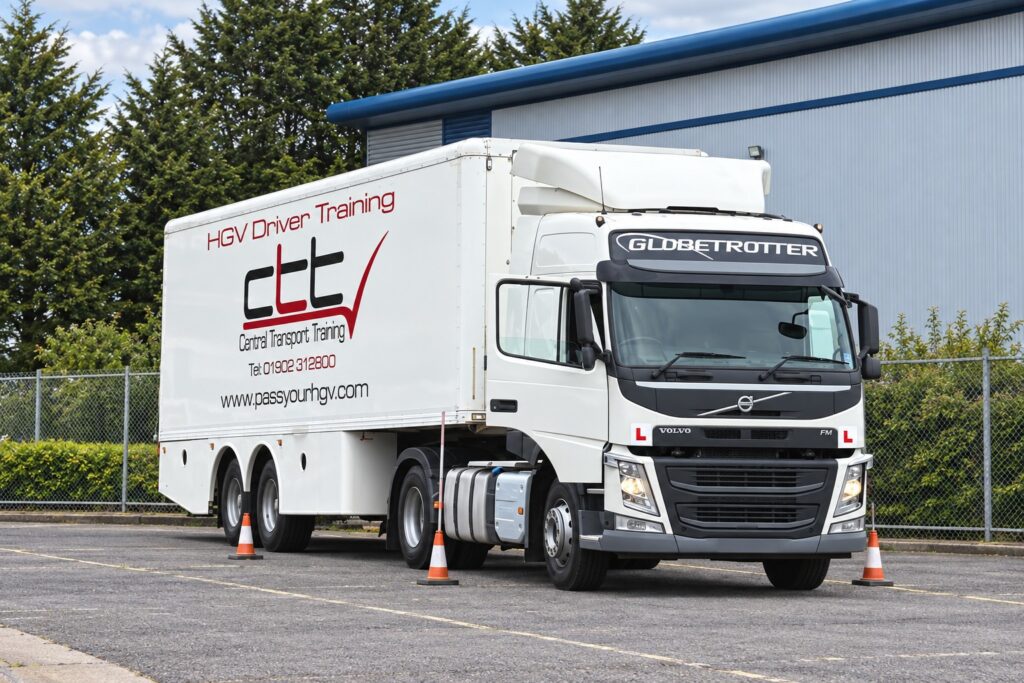
Train in a conventional articulated lorry from the outset. This route normally takes 8 days and gives you direct experience of driving, manoeuvring and handling an articulated vehicle.

Drawbar Route
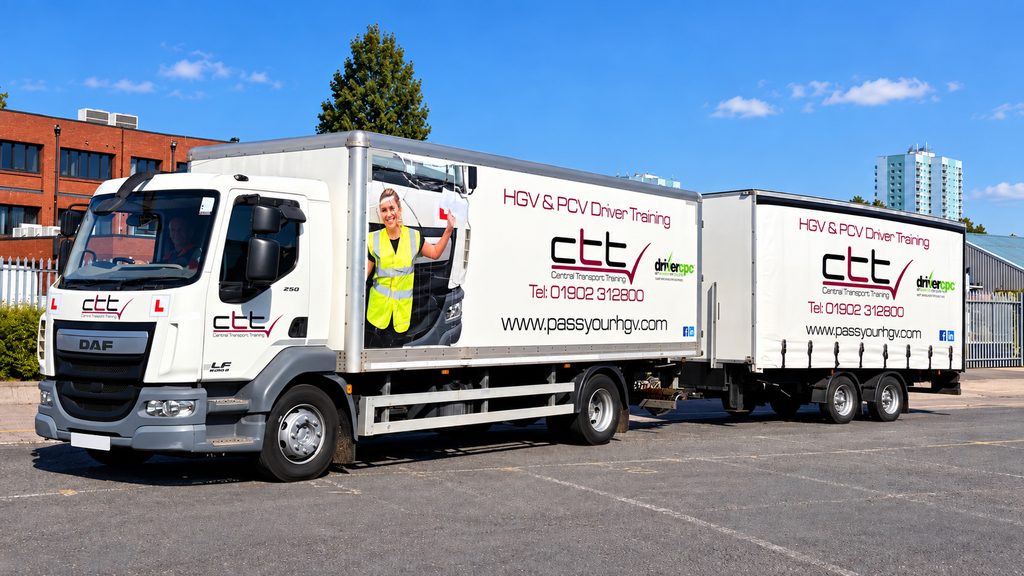
Train using a Category C rigid vehicle with a trailer. This route normally takes 5 days, is around 25% cheaper than our conventional articulated route, while still resulting in exactly the same Category C+E licence entitlement.

Articulated Familiarisation Available
If you choose the drawbar route and later want to experience a conventional articulated vehicle, you can book a half-day articulated familiarisation session with us after gaining your licence.
What does the Category C+E Course Involve?
Practical Training
Your training will cover the skills needed to control and drive a Category C+E vehicle safely and confidently. This includes vehicle controls, observation, road positioning, junctions, roundabouts, reversing, trailer handling, coupling and uncoupling, and safe driving in a range of road and traffic conditions.
Module 3a – Off-Road Test
This is the off-road practical test. For Category C+E it includes an S-shaped reversing exercise into a bay and demonstrating the correct uncoupling and recoupling procedure. The test lasts up to 30 minutes.
Module 3B – On-Road Driving Test
Once you have passed Module 3A, you can take Module 3B. This is the on-road practical driving test. It includes vehicle safety questions and around one hour of road driving, during which the examiner assesses vehicle control, observation, use of mirrors and signals, speed, hazard awareness, road positioning and your ability to drive safely and independently.
Driver CPC – If You Need It
If you will be driving professionally and are not exempt, you may also need the Driver CPC qualification. This involves the additional Module 2 case studies test and Module 4 practical demonstration test.
Do I Need Driver CPC?
You will normally need Driver CPC if driving an HGV is the main part of your job. Some drivers may be exempt depending on how the vehicle is used and the type of work they carry out.
Examples where an exemption may apply include:
- Non-commercial driving
- Carrying tools, materials or equipment for your own work where driving is not your main activity
- Some agricultural, horticultural, forestry and fisheries work
- Certain emergency service and armed forces use
- Vehicle testing, repair or maintenance
- Driving lessons and licence testing
Module 2 – Case Studies Test
Module 2 is a computer-based case studies test based on situations you may face as a professional driver. If you need the full initial Driver CPC qualification, this is one of the additional tests you will need to complete.
Module 4 – Practical Demonstration Test
Module 4 is a practical demonstration test covering areas such as vehicle safety, load security, vehicle security, preventing illegal entry, emergency situations and safe working practices.
Still Unsure Whether You Need Driver CPC?
If you are unsure whether Driver CPC applies to you, speak to our team. We can explain the usual requirements and help you understand which parts of the qualification you may need.
Ready to Start your Category C+E Training?
Speak to our team about the conventional articulated and drawbar training routes, course availability and the next steps towards gaining your Category C+E licence.